
People have sailed the Seven Seas for centuries, but the idea to build a ship solely for luxurious sea travel didn’t come around until the late 19th century. The Jewish son of a Danish immigrant, Albert Ballin, took over his father’s immigration agency in 1874 and turned it into an independent shipping line. He eventually caught the eye of HAPAG executives who made him their general director in 1899 and put him in the position to make history.

HAPAG, or the Hamburg-American Line as it is often referred to, was the world’s largest shipping company at the time, and Ballin was hired to not just maintain that title, but push them into the future. And boy did he! He began by retrofitting cargo ships into barely passable cruise ships. While he garnered some success, not everyone believed that cruise ships were a good move for the company. This was Germany after all. Surely Germans weren’t going to travel for any reason but that of necessity. One of Ballin’s colleagues said that Germans “would surely not submit themselves to the hazards and discomforts of a long voyage just for the incidental fun of it,” Ballin obviously believed otherwise.
While Ballin had the business sense to realize that cruising to the Caribbean during the winter months would be a draw for tourists as well as profit for the company, he soon realized that using converted cargo ships had some downsides. Passengers had to deal with unsightly machinery, restrictive deck space, a lack of onboard amenities, and austere sleeping accommodations. None of which were what first-class passengers were used to. Also, at the time, popular Caribbean ports were not developed enough for such large ships. All this meant that converted cargo ships were a temporary measure and something would need to be done.
One of the first things Ballin did when he rose to the level of general director was to commission the first purpose-built cruise ship the world had ever known: the Prinzessin Victoria Luise. He hired the shipbuilder Blohm & Voss to construct a vessel specifically designed to match his vision of luxurious travel.
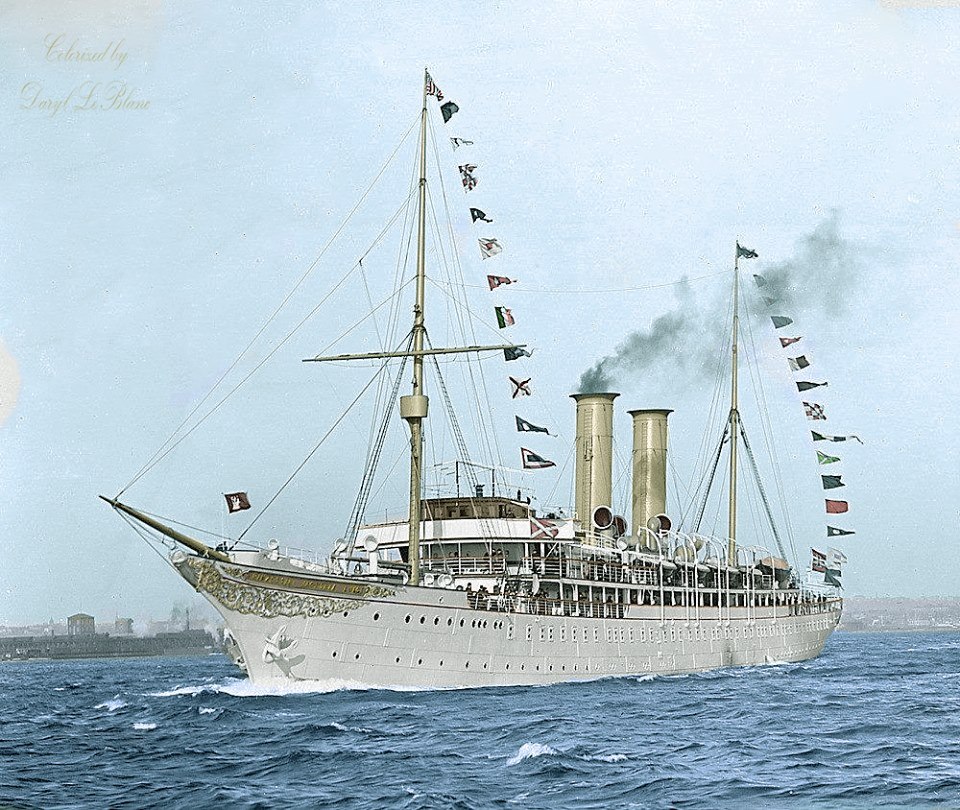
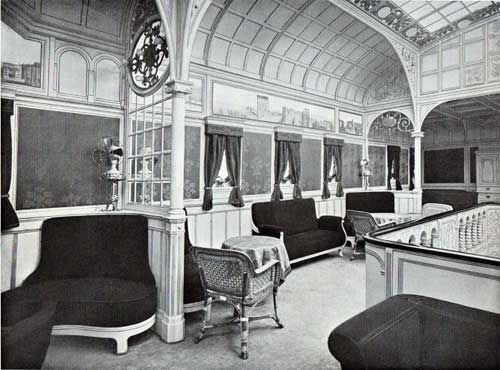
The Prinzessin Victoria Luise was a 407-foot, 4,419-ton vessel with twin-screw engines that could cut through the water at a speed of 16 knots (which is about 19 miles an hour). Named by Ballin after the German emperor’s only daughter, the Victoria Luise boasted a large gym, a social hall, a library, a smoking room, a large art gallery surrounding the dining room, wide promenade decks, a ballroom for dancing, and even a darkroom for amateur photographers. In addition to entertainment provided by musicians, passengers expected decadent cuisine, which was not an easy feat over 100 years ago. The Victoria Luise provided 120 spacious first-class only staterooms—each equipped with elegant European furnishings, brass beds and double-light portholes that could be opened when the ship was in warm climates. There were no accommodations for lower classes however, as the ship was designed for luxury travel and those who could afford to do so.
After launching from Hamburg on June 29, 1900, the Victoria Luise’s first cruise lasted 35 days and explored ports in the West Indies and Venezuela. The ship would sail to Norway and the Baltic in the summer and the Mediterranean and Caribbean in the winter. Over the years it docked in ports in New York, France, England, Ireland, Scotland, the North Cape in Norway and St Petersburg. And every port had well-planned shore excursions.
In February 1901, Scientific American highlighted that the vessel was “designed for a class of service which hitherto has been performed by the regular ships of this company…the first vessel of her kind to be built purely for yachting [leisure cruising] purposes.” It was deemed to be the “first purpose-built, non-private excursion ship: what we call ‘cruise’ ships today.” While the super rich had their own yachts, the Victoria Luise brought cruising to those who could not afford the expense of owning their own yacht. Ballin knew he’d need to market to a wealthy clientele in order to make the venture a success. To that end, he requested that engineering journals refer to the Victoria Luise as a “cruising yacht.”
Unfortunately, despite all the planning and effort, the lifespan of the Victoria Luise was short-lived. While on a Caribbean cruise in December 1906, it crashed against an uncharted ridge off the coast of Jamaica. The captain had attempted to enter the harbor without aid and mistaken which lighthouse he was using as a guide. It didn’t help that a recent volcanic eruption had changed the shape of the seabed off Jamaica making the charts the captain used unreliable. While no one was injured when the ship ran aground, after the evacuation, the captain went into his cabin and ended his life.
While the world of leisure cruising slowed during WWI and the depression, it would eventually gain momentum after WWII. Today we can look back and say that Modern day cruising owes a huge debt to the vision of Albert Ballin.
 Cruising From The Ozarks