The Passenger Vessel Services Act, or PVSA, is a piece of US legislation designed to protect American maritime interests. Most countries have something similar; however, the US probably has the strictest version. Basically the PVSA says that if a vessel wants to transport passengers between two US ports it must be flagged, or registered, in the US. To do this, the ship must be built in a US shipyard with US steel, owned by a US citizen and crewed by 90%+ American citizens. There is only one major cruise ship that meets the requirement, and I’ll talk more about that in a minute.
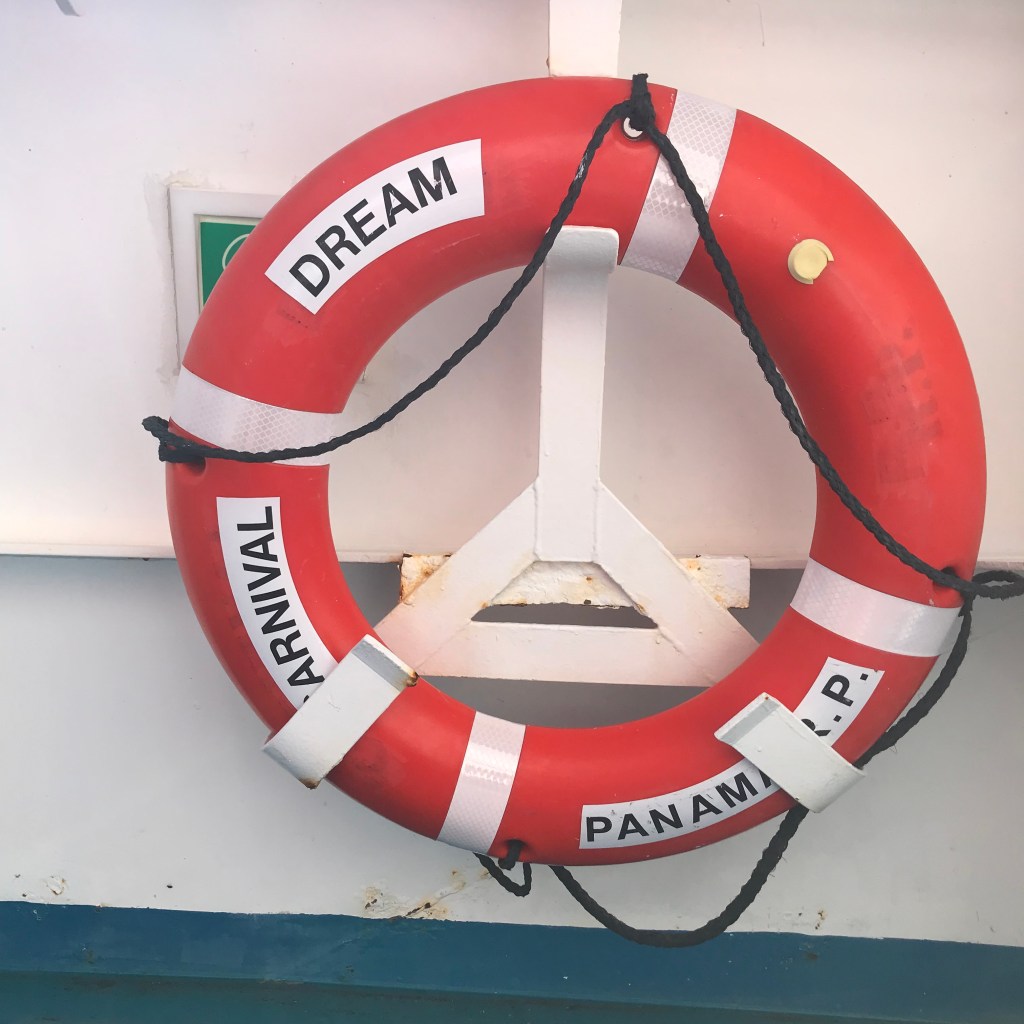
Due to costs, US cruise lines like Carnival, Royal Caribbean, Norwegian and others, register their ships under the flag of a foreign country. This allows the lines to adhere to the Passenger Vessel Services Act and circumvent US employment laws. Without it, cruising would be much more expensive.
The rule-of-thumb that cruise lines use when planning itineraries to ensure compliance, is when leaving from and returning to the same US port, they need to make a call in a nearby foreign port. This is why even short cruises make at least one stop in a foreign port.
Things get trickier when you are going from one US port to a different US port. Itineraries doing so will need to visit a distant foreign port, not just a nearby one. A distant foreign port must include somewhere in South America or the Caribbean. This has a massive effect on Alaskan cruises. It is popular for Alaskan itineraries to be one-way cruises. This means their ports of embarkation and departure will be different. However, these one-way cruises will have at least one of those ports be in Canada in order to satisfy the requirements of the The Passenger Vessel Services Act. You won’t see an Alaskan cruise begin in Seattle and end in Juno because none of the ships currently sailing Alaskan cruises are flagged in the US.
US Senator Lisa Murkowski from Alaska introduced the Cruising for Alaska’s Workforce Act in 2021 in an attempt to get an exception from the PVSA for Alaskan cruises but it died on the floor of Congress and was never voted on. Had it been signed into law, it would have allowed foreign-flagged passenger vessels with more than 1,000 passengers to sail from US port to US port on Alaskan cruises without the requirement of visiting a distant foreign port. This exemption would have automatically become null and void if a US flagged ship carrying more than 1,000 passengers began sailing in Alaska. Hers is not the only bill submitted to Congress in an attempt to make cruising through Alaska easier for cruise lines which would allow Alaskan ports to benefit more from the cruise industry. None have passed.
Senator Murkowski previously introduced the Alaska Tourism Restoration Act, signed into law on May 24, 2021, which provided a temporary exemption from the PVSA for cruises traveling between the State of Washington and Alaska in order to get around Canada’s restrictions preventing U.S. cruises from docking at their ports during Covid-era restrictions. This of course, has since been rescinded.
Another way the Passenger Vessel Services Act impacts itineraries are on sailings from the West Coast to Hawaii. They are two options; Either a one way to or from Vancouver to Honolulu with the second being a round-trip out of a US west coast port with a stop in Ensenada, Mexico. This is to meet that nearby foreign port requirement.
Norwegian’s Pride of America is the one cruise ship that can sail around the Hawaii islands without the need to visit a foreign port because it is flagged as a US vessel. The majority of the crew are US citizens and are hired and paid based on US employment laws. All this means that a cruise on the Pride of America will likely cost cruisers a pretty penny. For example, a quick search shows a 7-day cruise around Hawaii on the Pride of America has a base price of $1,300. But a 9-day cruise on Royal Caribbean’s Ovation of the Seas out of Vancouver, Canada to Hawaii has a base price of just over $700, That is a significant difference. And that doesn’t take into account the difference in the cost of flights and hotels.
You may be wondering what happens if a cruise ship ignores the PVSA. Well that would be a costly mistake. The cruise line would be fined over $700 for every soul on board if they do not make a stop in a foreign port. In fact, if someone were to be put off the ship for some reason before the line made this all-important stop at a foreign port, no matter the reason, even for a medical emergency, the ship is fined for it and could potentially pass cost that along to the passenger. If a ship were to encounter a storm that prevents them from making landfall in a foreign port, which could very well happen on a short 3-day cruise with only one stop, that could be a monetary disaster for the line!
Do you think the Passenger Vessel Services Act is outdated? Do you think something like the Cruising for Alaska’s Workforce Act is a good solution or doesn’t go far enough? Comment Below.
 Cruising From The Ozarks